
LeConte Glacier Alaska: Icebergs, Wildlife & Visitor Guide
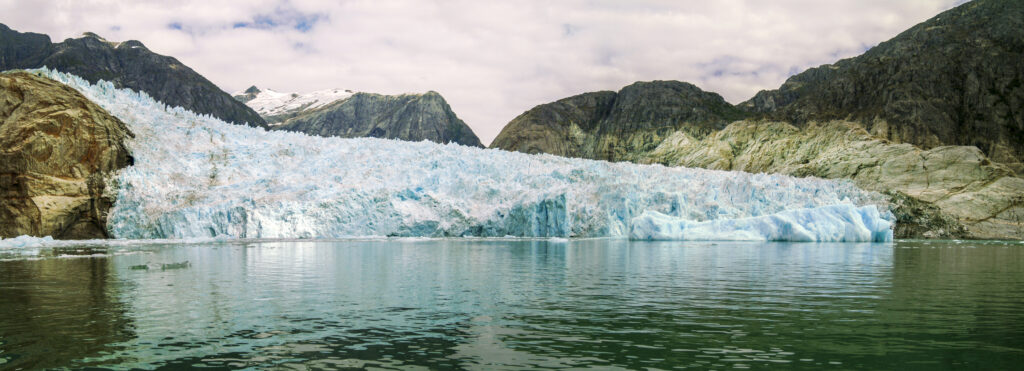
LeConte Glacier near Petersburg, Alaska is the kind of place that makes Southeast Alaska feel genuinely wild. Reached by boat through a dramatic fjord filled with floating ice, this active tidewater glacier descends from the Stikine Icefield to the saltwater of LeConte Bay. Visitors may encounter blue icebergs, harbor seals, waterfalls and the unforgettable sight and sound of ice breaking from the glacier’s face.
For guests staying at Scandia House in Petersburg, a LeConte Glacier excursion offers an opportunity to experience one of the region’s most remarkable landscapes without turning it into a multi-day wilderness expedition. Local boat operators make trips into the bay, with the journey itself becoming a major part of the adventure.
Here’s what makes LeConte special, what you may experience on the water and what to know when planning a trip from Petersburg.
What Makes LeConte Glacier Special?
LeConte is a tidewater glacier, meaning the glacier flows from land until its terminus reaches ocean water.
Unlike a glacier viewed from a distant highway or overlook, LeConte is approached through a fjord where the landscape changes as you travel deeper into the bay.
Mountains rise around the water. Waterfalls descend the slopes. Icebergs begin appearing ahead of the boat, sometimes in extraordinary shapes and shades of white and blue.
At the head of the fjord is the glacier itself.
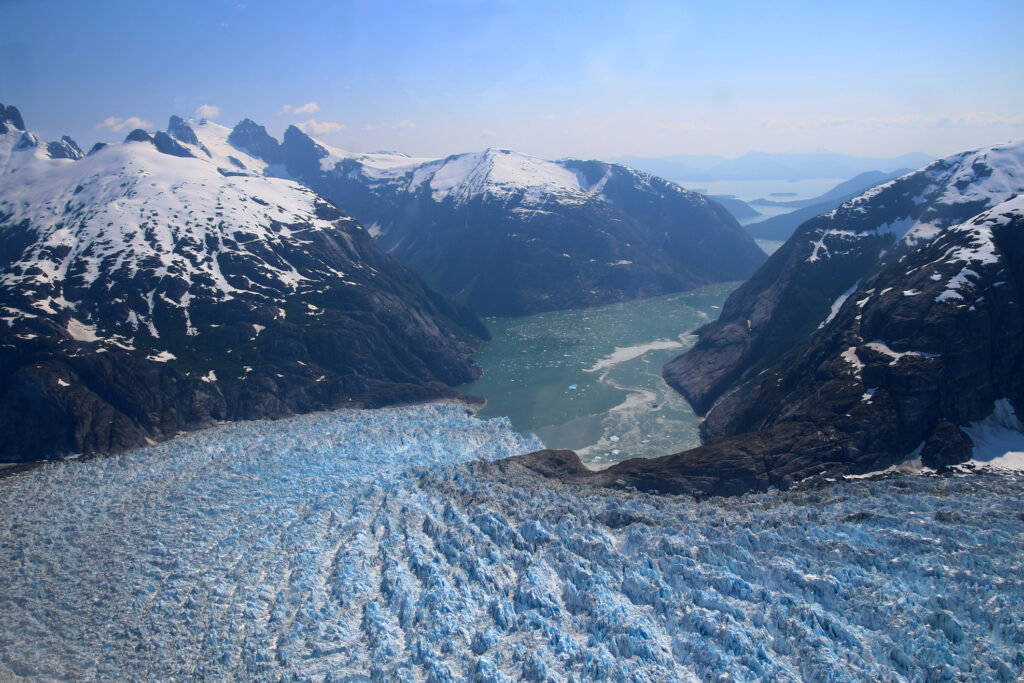
LeConte is widely described as the southernmost active tidewater glacier in the Northern Hemisphere. It originates in the Stikine Icefield and flows approximately 22 miles before reaching LeConte Bay, about 22 miles east of Petersburg.
Its relative proximity to Petersburg makes it one of the community’s signature wilderness experiences.
The Adventure Begins Before You Reach the Glacier
Don’t think of a LeConte trip as a boat ride followed by a glacier viewing.
The boat ride is part of the experience.
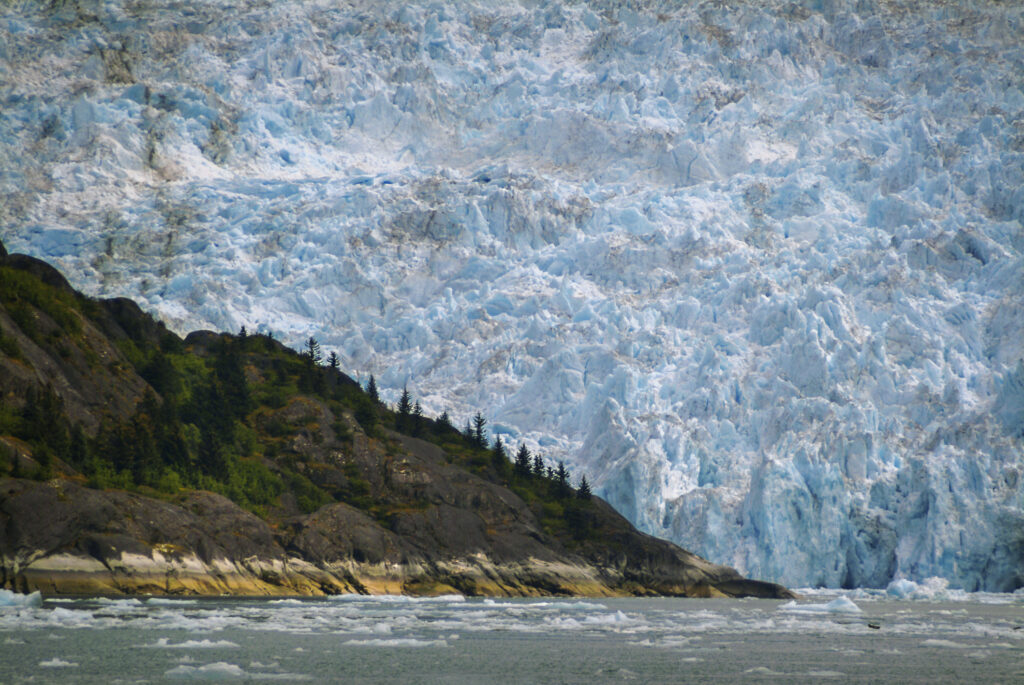
Leaving Petersburg puts you into the waterways and mountain scenery that define this part of Southeast Alaska. As the boat approaches LeConte Bay, the environment becomes increasingly dramatic.
The fjord extends roughly 10 miles inland, with steep mountains rising on either side. Depending on current conditions, floating ice may become increasingly common as you travel toward the glacier.
No two trips look exactly alike because the ice is constantly moving.
An open stretch of water on one visit may be filled with icebergs on another. Captains assess the conditions in front of them and determine how far into the bay they can safely travel.
Icebergs Are Part of the Show
You don’t have to reach the face of LeConte Glacier before the scenery becomes impressive.
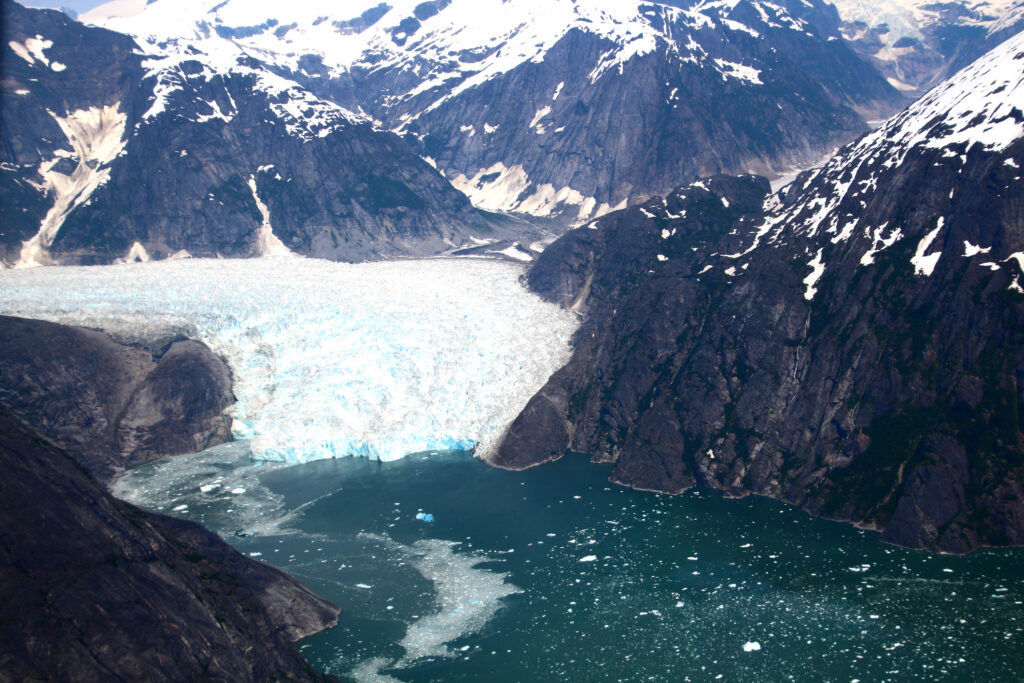
Icebergs calved from the glacier drift through the fjord in an extraordinary variety of sizes, colors and shapes.
Some appear brilliant white. Others reveal deep blue sections where densely compressed ice absorbs much of the visible light and allows blue wavelengths to dominate.
You’ll also see ice sculpted by melting, waves and weather into shapes that can look completely different from one side to the other.
And what you see above the surface is only part of the iceberg.
Much of a floating piece of glacial ice remains underwater, one reason experienced captains give icebergs plenty of respect while navigating the bay.
Why Does the Glacier Calve?
One of the most dramatic things visitors hope to witness is glacier calving.
A tidewater glacier slowly moves toward the sea under the force of gravity. As ice reaches the terminus, sections can fracture and break away into the water.
Those pieces become icebergs.
Sometimes calving involves a relatively small section of ice. At other times, a much larger portion can separate from the glacier.
The experience isn’t only visual.
Glacial ice breaking apart can produce a powerful cracking or booming sound, followed by the impact of ice entering the water. Larger calving events can also create waves.
That’s one reason tour captains maintain appropriate distances from the glacier’s face and continuously evaluate conditions.
Calving is a natural process, but it isn’t something anyone can schedule. You may witness it during your visit, or the glacier may remain relatively quiet while you’re there.
A Place Once Known for the Sound of Ice
The thunderous character of LeConte Bay isn’t a modern discovery.
Naturalist John Muir visited the glacier in 1879 and wrote about a Tlingit name for the fjord translated as “Thunder Bay,” referring to the sounds associated with breaking ice.
When Muir visited, icebergs reportedly occupied a stretch of the bay extending for miles.
The glacier was later named for geologist Joseph Le Conte, a friend of Muir who became a professor at the University of California and was among the founders of the Sierra Club.
That history adds another layer to a place Indigenous people knew long before outside explorers began documenting Southeast Alaska’s glaciers.
Harbor Seals Find Refuge Among the Ice
LeConte Bay isn’t only about geology.
It’s also important wildlife habitat.
Harbor seals use the ice-filled waters and floating icebergs of the bay, particularly during the pupping season. Ice can provide resting places and a degree of protection within the fjord.
Depending on the season and conditions, visitors may see seals hauled out on pieces of floating ice or swimming nearby.
Give them space.
Responsible operators observe wildlife from appropriate distances rather than approaching closely enough to disturb resting adults or pups.
Other Southeast Alaska wildlife may also appear during the journey. Whales, sea lions and bald eagles are among the animals tour operators report encountering in the surrounding waters, although wildlife sightings can never be guaranteed.
How Close Will You Get to LeConte Glacier?
This is one of the most important expectations to set before booking a tour.
There isn’t a fixed point where every boat reaches the glacier.
Conditions inside LeConte Bay can change significantly. Floating ice may prevent a vessel from traveling as far into the fjord as it could on another day.
Experienced captains navigate based on current ice, weather and water conditions rather than trying to force the boat toward a predetermined location.
That means a glacier excursion should be viewed as a journey into a dynamic environment, not a promise that your boat will reach a specific distance from the face.
Even when ice limits the approach, the journey through iceberg-filled LeConte Bay can be spectacular in its own right.
Why LeConte Is So Interesting to Scientists
Visitors see a beautiful glacier. Researchers see a complicated system where ice, ocean water, climate and the shape of the fjord interact.
LeConte has been studied extensively because tidewater glaciers behave differently from glaciers that terminate on land.
As the glacier moves into deep seawater, conditions at its terminus affect how rapidly ice is lost through calving. Water depth and the shape of the fjord can influence whether a tidewater glacier retreats, advances or temporarily stabilizes.
Historical observations show that LeConte’s terminus has changed position considerably over time.
Research into places like LeConte helps scientists better understand glacier movement, iceberg formation and the complex relationship between glaciers and the ocean.
You don’t need a background in glaciology to appreciate any of this while you’re there. But knowing that the landscape is actively changing makes looking across the fjord even more interesting.
How Do You Visit LeConte Glacier from Petersburg?
For most Petersburg visitors, the practical way to experience LeConte is aboard a guided boat excursion.
Local operators offer trips into LeConte Bay using vessels designed for Southeast Alaska waters.
These aren’t sightseeing cruises aboard enormous ships. Depending on the operator and vessel, tours can offer a much smaller-scale experience with a local captain navigating among the islands, waterways and ice.
Because trip schedules, vessels, duration, pricing and availability can change, it’s best to compare current offerings directly with Petersburg-area operators when planning your visit.
Ask about the type of boat, whether there is an enclosed or heated cabin, restroom availability, trip duration, cancellation policies and what passengers should bring.
Don’t Choose a Tour Based Only on Who Promises to Get Closest
A responsible glacier captain can’t guarantee exactly how close you’ll get.
Ice conditions determine that.
If the fjord is relatively open, your vessel may be able to travel farther toward the terminus. Heavy concentrations of ice can change the plan.
That’s not a failed tour. It’s the reality of visiting an active tidewater glacier.
When comparing operators, local knowledge and experience navigating icy Southeast Alaska waters are more meaningful than a promise of a particular viewing distance.
The best trip is one where the captain makes decisions based on the conditions actually encountered that day.
What Should You Bring?
Southeast Alaska rewards layers.
Conditions on the water can feel considerably cooler than they did while you were standing in Petersburg, particularly as you travel toward a bay filled with glacial ice.
Consider bringing:
- A warm insulating layer
- A waterproof or water-resistant outer layer
- Comfortable footwear with good traction
- A hat and gloves on cooler days
- Sunglasses
- A camera or phone with plenty of available storage
- Binoculars for wildlife viewing
- Any food or drinks not provided by your tour operator
Check with your specific operator before packing because vessel amenities vary.
And don’t leave your camera buried at the bottom of a bag. Wildlife and interesting ice formations don’t wait for you to find it.
Photography Is About More Than the Glacier Face
It’s natural to spend the entire ride waiting for the first clear view of LeConte Glacier.
Don’t overlook everything happening along the way.
Some of the most interesting photographs may come from individual icebergs floating against dark water, seals resting on ice, waterfalls descending from mountainsides or the scale created by a small boat surrounded by an enormous fjord.
Cloudy weather isn’t necessarily bad for photography either.
Southeast Alaska’s overcast skies can reduce harsh contrast on bright ice and bring out subtle blue tones that are more difficult to see under intense sunlight.
Keep watching behind you as well. The landscape often looks completely different when viewed in the opposite direction.
Is LeConte Glacier Good for Families?
A glacier excursion can be an unforgettable family experience, but parents should consider the boat trip itself before booking.
Ask the operator about age recommendations, seating, cabin configuration, restroom facilities and the expected length of the excursion.
A child who enjoys boats, wildlife and exploring may find an iceberg-filled fjord fascinating. A very young child who struggles with several hours aboard a smaller vessel may have a different experience.
Conditions on the water also vary, so families should discuss any concerns directly with the operator before reserving.
When Is the Best Time to Visit?
There isn’t one single day or month when LeConte always looks its best.
The glacier and fjord are dynamic.
Ice conditions change. Weather changes. Wildlife moves. Calving activity varies.
Summer is naturally popular with Alaska travelers and several operators run glacier excursions during the visitor season. Some operators may offer trips beyond the peak summer months as conditions and demand allow.
Rather than choosing a date because someone online reported perfect conditions on that same date several years ago, plan around your Petersburg trip and ask local operators what they typically expect during your visit.
Even then, nature gets the final say.
Leave Room for Southeast Alaska Weather
Weather is part of travel in Petersburg.
Rain and clouds don’t automatically ruin a glacier excursion, but wind, visibility, sea conditions and ice can influence boat operations.
If seeing LeConte is one of your highest priorities, consider avoiding an itinerary so rigid that you have only one possible window for the excursion.
Having some flexibility can be valuable if conditions require a schedule change.
Your tour operator will have the most relevant information about current conditions and whether a trip can operate safely.
Is LeConte Glacier Worth the Trip?
For many Petersburg visitors, it’s one of the experiences that makes traveling to this part of Alaska worthwhile.
LeConte isn’t simply something you look at from a roadside turnout.
You travel toward it through Southeast Alaska’s waterways. Mountains rise around you. Ice begins appearing in the fjord. Harbor seals may be resting on bergs. The water becomes increasingly filled with evidence of the enormous river of ice ahead.
Then, if conditions cooperate, the glacier comes into view.
You may hear it before anything happens.
A crack. A rumble. Perhaps the unmistakable boom of ice breaking free and falling into the sea.
Or the glacier may remain quiet, leaving you to appreciate the scale of the landscape and the ice already floating around you.
Either experience is authentically LeConte.
Make Petersburg Your Base for Exploring LeConte
Part of what makes LeConte Glacier such a compelling Petersburg experience is the contrast between the two places.
You can begin the day in a small Southeast Alaska fishing community and, within the same excursion, find yourself traveling through a remote fjord surrounded by mountains, wildlife and glacial ice.
Guests staying at Scandia House can use Petersburg as a comfortable home base while exploring the waterways and wilderness beyond town.
Check with local glacier tour operators before your trip, reserve ahead when appropriate and leave enough flexibility for Alaska’s weather and ice conditions.
Most importantly, don’t think of LeConte as a single viewpoint you’re trying to reach.
The journey through the fjord is the experience.